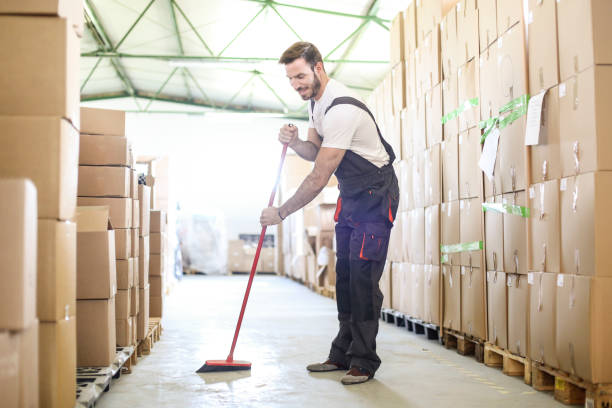
Warehouses rarely get the same attention as customer facing spaces when it comes to cleanliness. There is no reception desk to impress, no client walking through the door expecting polished floors. Yet these vast, busy spaces present some of the most serious cleaning and hygiene challenges of any commercial environment, simply because of the sheer volume of activity, machinery and materials moving through them daily.
Dust builds up on high shelving. Forklifts track debris across concrete floors. Loading docks accumulate grime from constant vehicle movement. Left unmanaged, all of this quietly chips away at safety, efficiency and even the condition of stored goods.
The Hidden Cost of a Neglected Warehouse
A dirty warehouse is rarely just an aesthetic issue. Dust accumulation on machinery can interfere with sensors and moving parts, leading to more frequent breakdowns and costly downtime. Slippery floors caused by spilled liquids, oil leaks or accumulated grime are a leading cause of workplace injuries in logistics and storage environments.
Stock damage is another overlooked consequence. Dust and debris settling on packaging, pallets or exposed products can lead to contamination issues, particularly in facilities handling food, pharmaceuticals or sensitive electronics. What starts as a minor cleaning oversight can quickly turn into a costly compliance or quality control problem.
What a Structured Cleaning Program Covers
Effective Warehouse Cleaning Sydney programs are built around the specific layout and workflow of each facility rather than a generic checklist. High level dusting of racking and beams, floor scrubbing suited to heavy machinery traffic, loading dock maintenance, and regular attention to staff amenities all need to be scheduled around operational hours to avoid disrupting productivity.
Industrial floor scrubbers and sweepers are typically used across large open areas, since manual mopping simply cannot keep pace with the scale involved. Specialised attention is often required for areas prone to oil or chemical spills, as standard detergents may not be sufficient or safe for the surfaces and substances involved.
Safety Compliance and Insurance Considerations
Workplace health and safety regulations place clear obligations on facility operators to maintain safe walking and working surfaces. A well documented cleaning schedule delivered through professional Warehouse Cleaning Sydney services can form an important part of demonstrating compliance during an audit or after an incident.
Insurance providers also pay close attention to housekeeping standards when assessing claims related to slips, falls or fire risk. Cluttered walkways, blocked fire exits and excessive dust build up near electrical equipment can all become liability issues if a cleaning program has not been properly maintained and documented.
Scheduling Around a Live Operation
One of the biggest challenges in warehouse cleaning is that most facilities never fully stop operating. Deliveries arrive at all hours, pick and pack teams work in shifts, and machinery needs regular access to the floor. A cleaning partner experienced in Warehouse Cleaning Sydney facilities will build a program around this reality, often working overnight, during quieter shift changes, or in rotating zones so that operations are never brought to a standstill.
Communication between the cleaning team and warehouse management becomes essential here. Clear protocols around restricted areas, hazardous material handling and equipment shutdown procedures need to be understood by everyone involved to avoid accidents or unnecessary delays.
High Reach and Racking Considerations
Warehouse ceilings and high racking are often overlooked entirely in routine cleaning, simply because they are difficult to reach without specialised equipment. Dust and cobwebs accumulating above eye level can eventually fall onto stored goods below, or contribute to poor air quality as it circulates through the building. Periodic high level cleaning using extendable equipment or scissor lifts is an important part of a complete program, even though it happens far less frequently than floor level tasks.
Pallet racking itself also benefits from regular attention, since dust and debris can build up on horizontal beams over time. In facilities storing food, pharmaceuticals or other sensitive goods, this kind of build up is not just unsightly, it can represent a genuine contamination risk that auditors and quality control teams will be looking for during inspections.
Pest Prevention Through Consistent Cleaning
Warehouses, particularly those storing food, packaging or paper based products, are naturally attractive to pests if cleaning standards slip. Crumbs, spilled product and cardboard offer both food and shelter, and once an infestation takes hold it can be extremely difficult and costly to fully eliminate, sometimes requiring stock quarantine or destruction.
Regular, thorough cleaning through a dedicated Warehouse Cleaning Sydney program acts as one of the most effective forms of pest prevention available, removing the food sources and nesting materials that would otherwise allow a small pest problem to become a much larger one.
Supporting Efficient Stocktakes and Audits
A clean, well organised warehouse floor also makes practical operational tasks easier to perform. Stocktakes, safety audits and equipment inspections all move faster when walkways are clear, labelling is visible and dust has not obscured barcodes or shelf markings. What seems like a minor cleaning detail can end up saving hours of staff time during a busy quarterly stocktake.
Insurance assessors and workplace safety auditors often comment on how much easier a site is to evaluate when it is clean and orderly, since hazards, damaged stock or maintenance issues are far easier to spot against a tidy backdrop than in a cluttered, dusty environment where problems can hide in plain sight.
Final Thoughts
A clean warehouse is a safer, more efficient and more professional operation. It reduces the risk of injury, protects valuable stock, supports compliance obligations and simply makes day to day work easier for every staff member who relies on that space. For operators still treating cleaning as an occasional afterthought, the cost of neglect tends to show up eventually, whether through downtime, damaged goods or a workplace incident.
Investing in a structured, professionally managed cleaning program is one of the more straightforward ways a warehouse operator can protect both people and profitability at the same time.
As Sydney’s logistics sector continues to grow, competition among operators is increasingly shaped by efficiency and reliability rather than location alone. A well maintained facility supports faster picking times, fewer safety incidents and a more professional impression during client or partner site visits, all of which contribute to a warehouse operation that runs smoothly and holds up well under scrutiny whenever it matters most.